Details
- Release date: December 22, 2025
- Genre: Simulation
- Developer: ONGAKUKAN
- Publisher: EAST JAPAN RAILWAY TRADING
- Platforms: Steam
Current prices

|
Steam
Digital
|
$26.99
|
Price history
| All time low | |
| $26.99 | |
Description
■Chūō・Sōbu Line(Local)
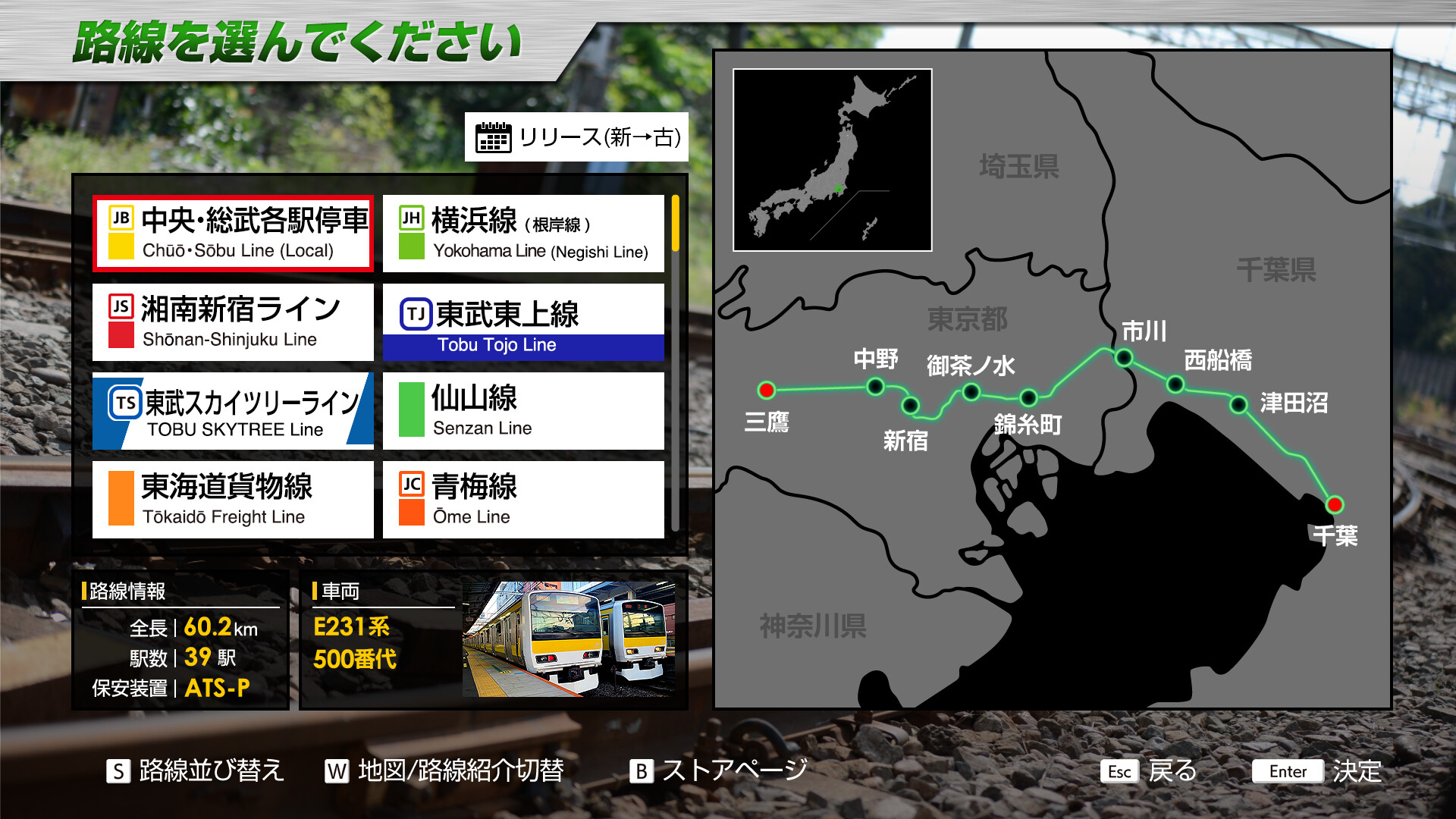
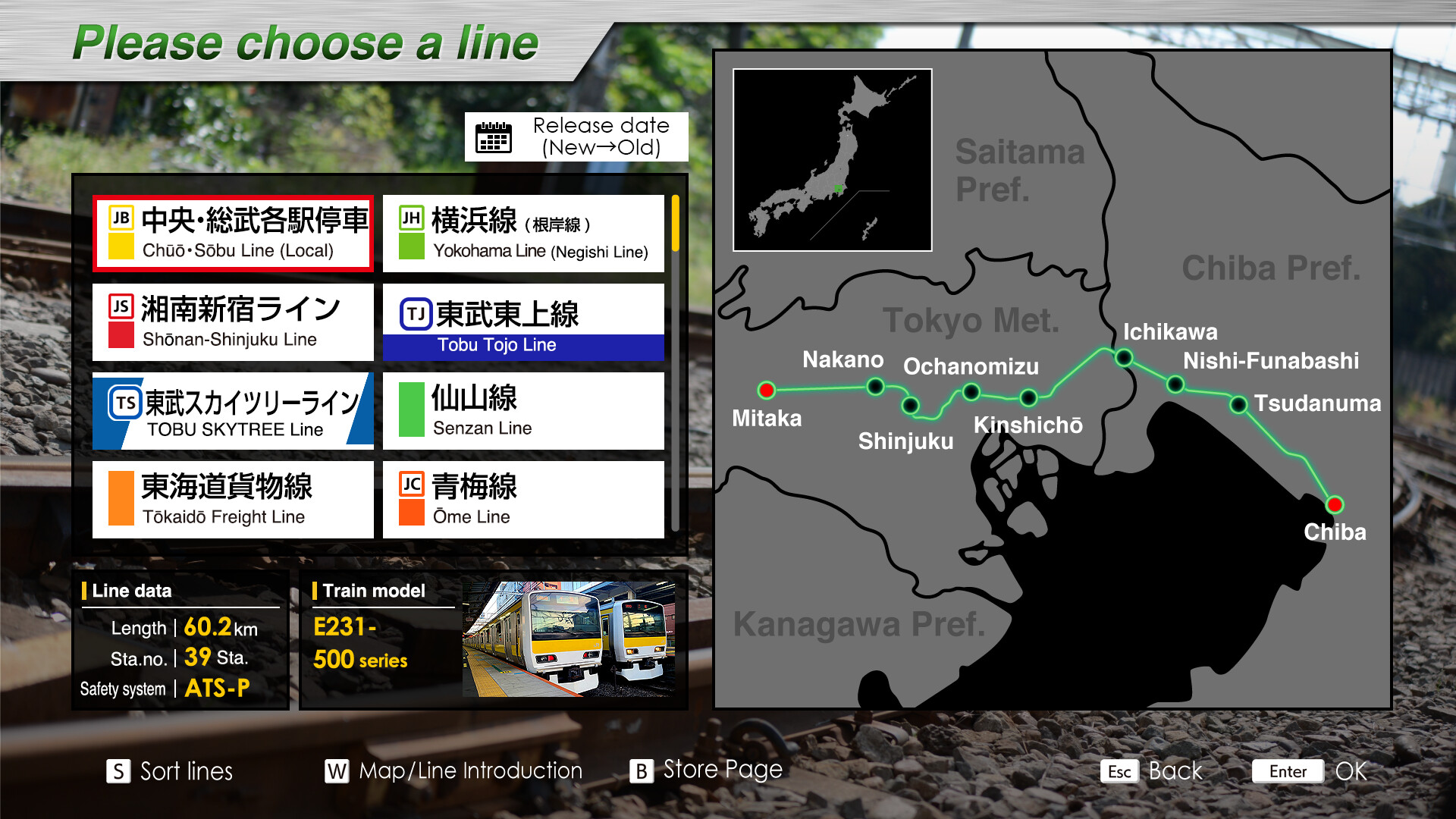
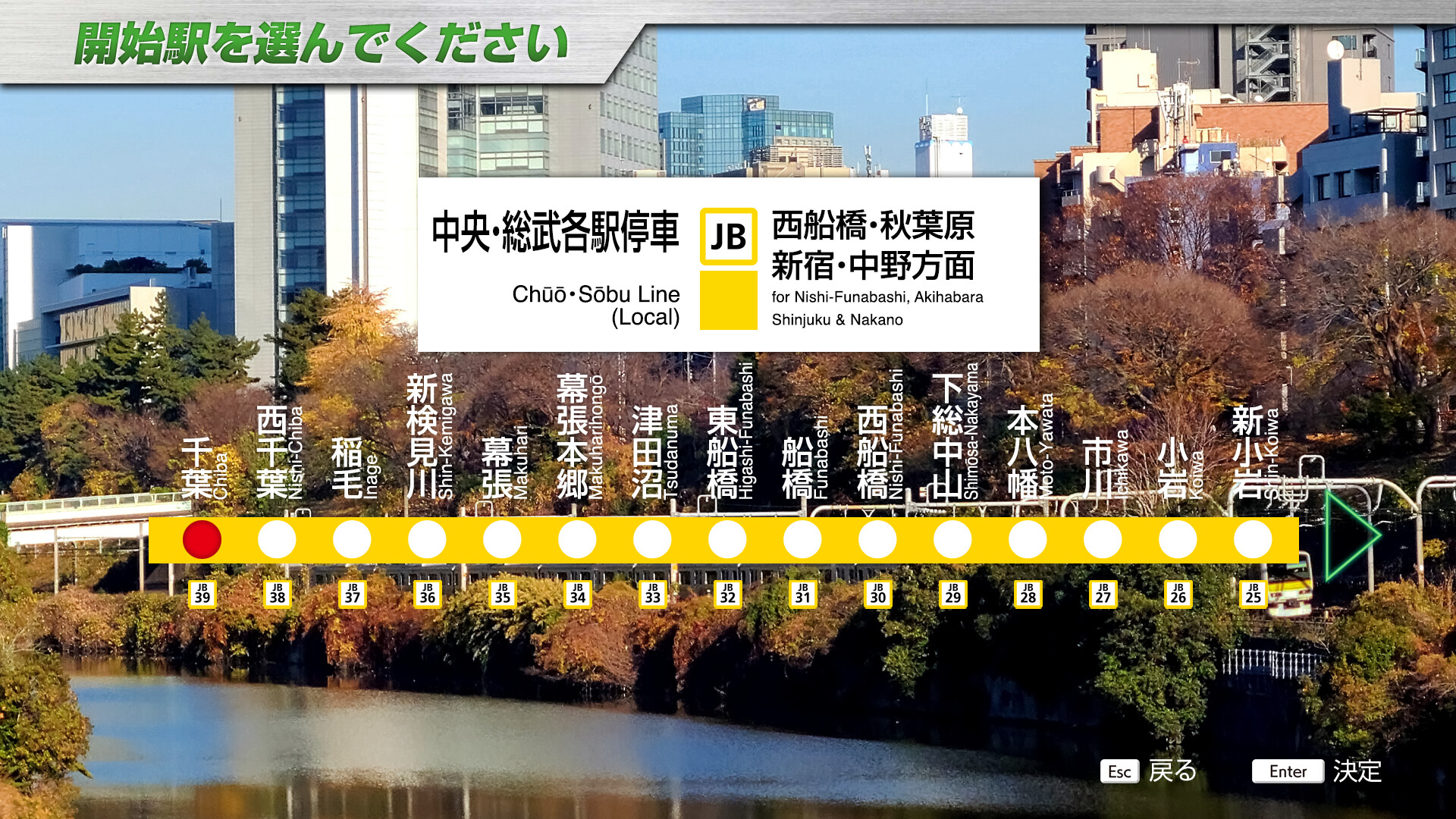
The Chūō/Sōbu Line Local trains operate on a 60.2 km route connecting Chiba Station in Chiba City, Chiba Prefecture, and Mitaka Station in Mitaka City, Tokyo. The journey between these two stations takes approximately 1 hour and 30 minutes. The section between Chiba and Kinshichō Stations runs parallel to the Sōbu Rapid Line, while the section between Ochanomizu and Mitaka Stations runs parallel to the Chūō Limited Express Line. The only section where it operates independently is the 4-station stretch between Kinshichō and Ochanomizu Stations.
Additionally, through service operates between Tsudanuma and Nishi-Funabashi stations and between Nakano and Mitaka stations with the Tokyo Metro Tōzai Line. Within these sections, you can see Tokyo Metro rolling stock and E231-800 series trains.
The Chūō/Sōbu Line local trains run parallel to the rapid line for most of their route and serve numerous transfer stations to other lines, resulting in high passenger volume even outside rush hours. Furthermore, the line is familiar to many people during events, as its route includes sports and concert venues and hosts fireworks displays.
A key feature is that most sections run on elevated tracks. Starting from the suburbs of Chiba Prefecture, the line traverses residential areas, gradually approaching the city center as it crosses rivers like the Edogawa and Arakawa. It then passes through the outer moat of Edo Castle near Yotsuya and the bustling Shinjuku district, continuing on to the western suburbs of Tokyo.
Because the Chūō/Sōbu Local Line traverses the city center from east to west, the character of the train changes mid-journey—from a “train heading from the suburbs to the city center” to a “train heading from the city center to the suburbs.” Enjoy the ride as it crosses the city center, savoring the slowly changing scenery unique to a local train.
Highlight
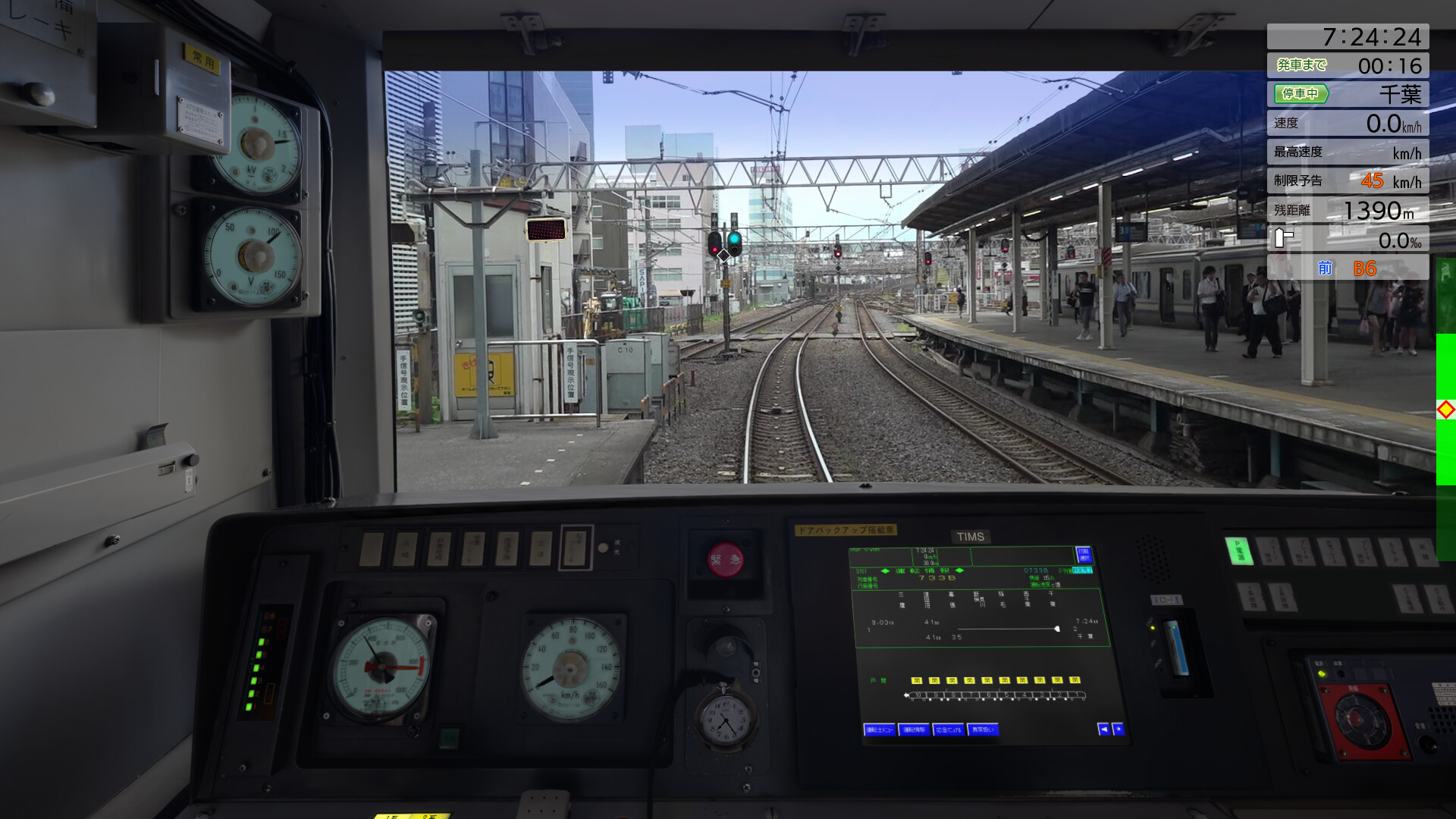
□Chiba Station to Nishi-Chiba Station
Passes the 255 series trains, which have now ended regular service.
□Makuhari Station
A station with two platforms and three tracks. Trains originating from this station are scheduled.
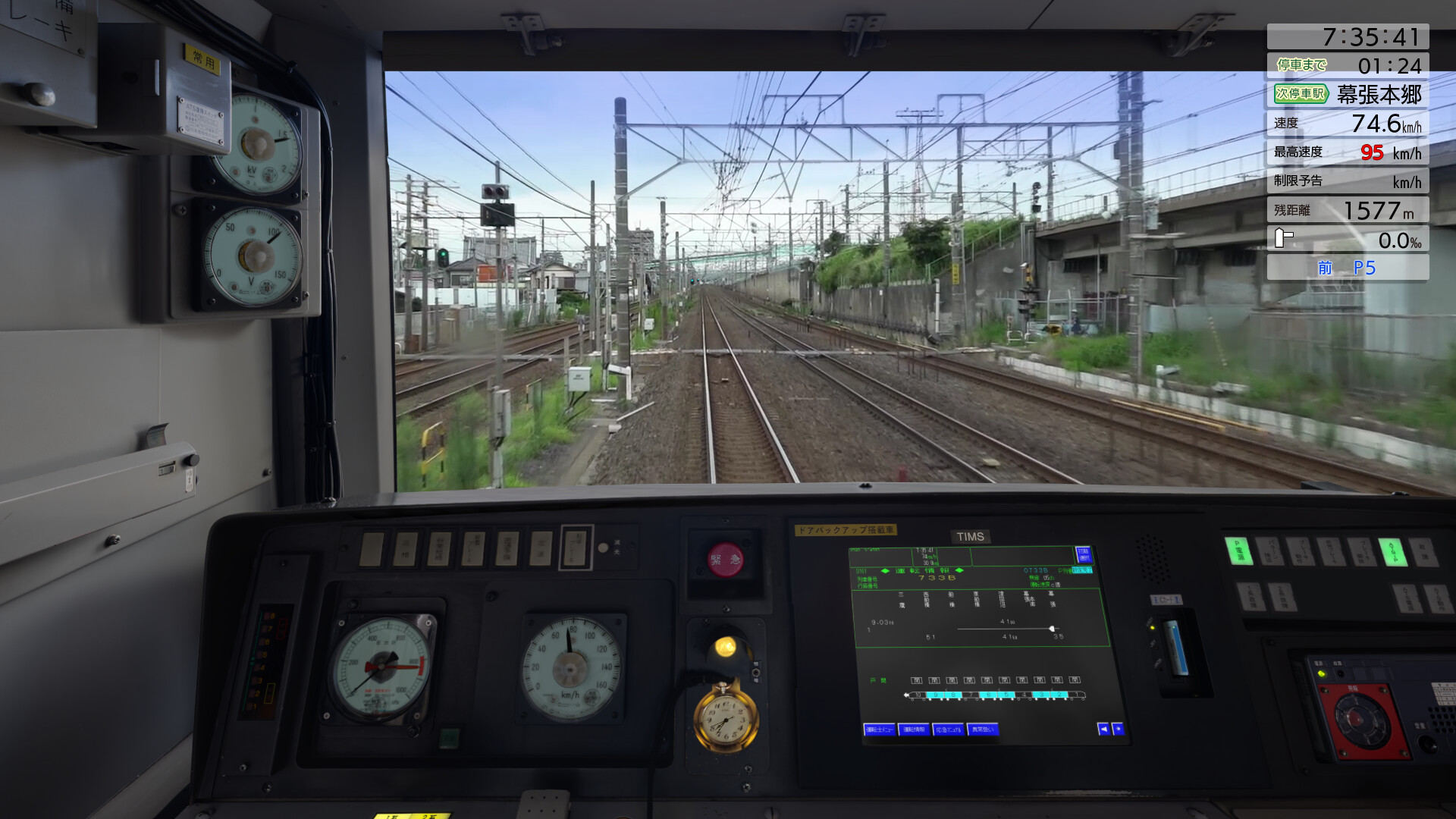
□Makuhari Station to Makuharihongō Station
Passes through Hanadate Crossing, the only level crossing on the Chūō・Sōbu Line(Local). Due to its narrow width, only pedestrians and two-wheeled vehicles can pass.
□Makuhari Station~Makuharihongo Station~Tsudanuma Station
The vast Makuhari Rolling Stock Center spreads out on the right. Trains for the Sobu Rapid Line and those operating in the Bōsō region are stored here.
The Keisei Chiba Line runs parallel on the left.
□Makuharihongo Station~Tsudanuma Station
Just before Tsudanuma Station, the line crosses tracks with the Shin-Keisei Electric Railway Line (now the Keisei Matsudo Line).
□Tsudanuma Station~Higashi-Funabashi Station
After departing Tsudanuma Station, tracks branch off to the left toward the Tsudanuma Maintenance Center.
Numerous trains enter this facility after arriving at Tsudanuma Station.
□Funabashi Station to Nishi-Funabashi Station
After departing Funabashi Station, the elevated TOBU URBAN PARK Line tracks are visible on the right.
Shortly after, it crosses the Keisei Main Line.
Just before Nishi-Funabashi Station, a connecting line branches off for through service to the Tokyo Metro Tozai Line.
□Nishi-Funabashi Station
This station intersects with the Keiyō Line and Musashino Line and sees high passenger volume. Trains originating from this station are scheduled, primarily during the morning rush hour.
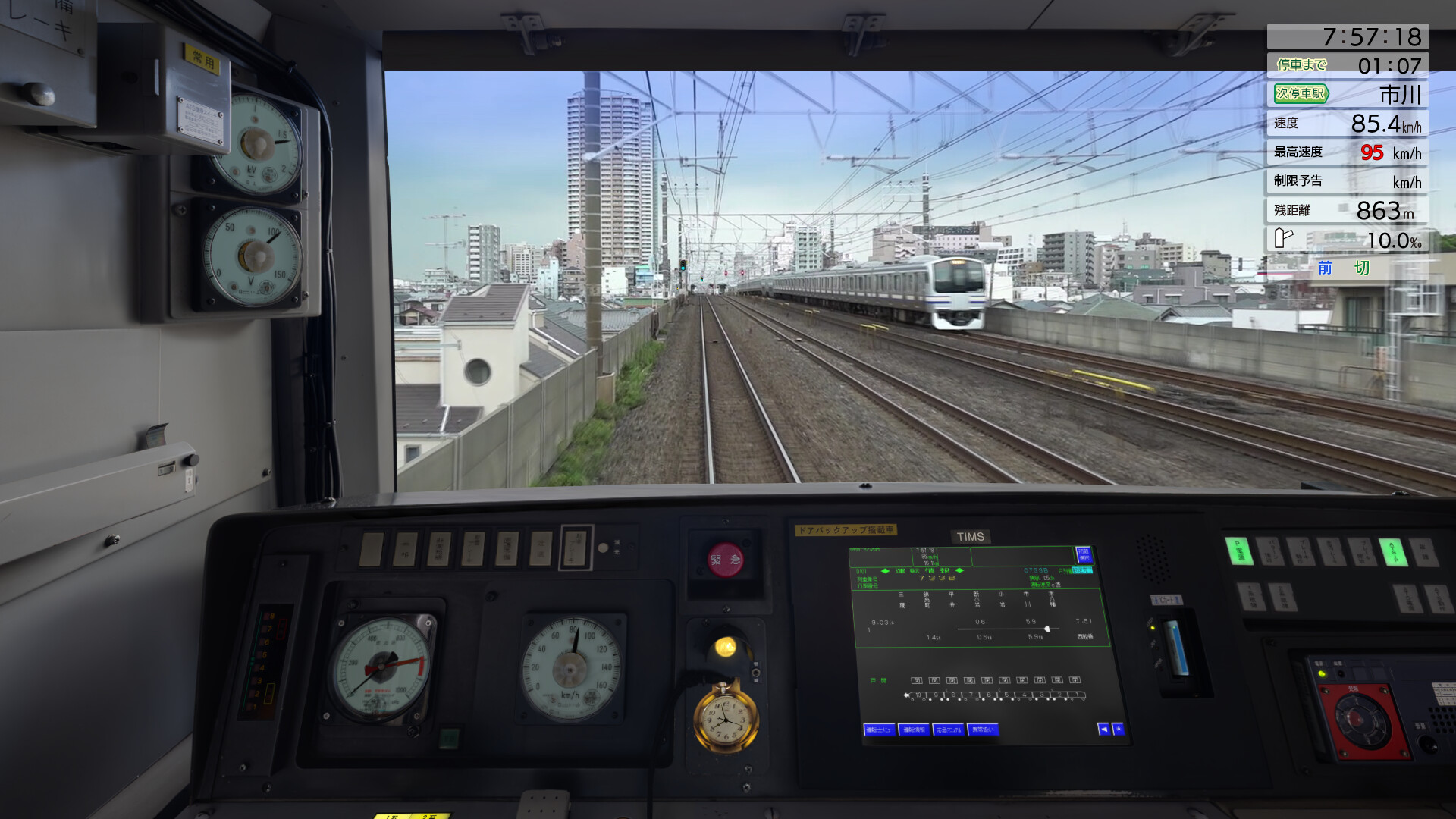
□Ichikawa Station to Koiwa Station
Crosses the Edogawa River, entering Tōkyō from Chiba Prefecture.
□Koiwa Station to Shin-Koiwa Station
The light green iron bridge crosses the Shin-Nakagawa River.
Near Shin-Koiwa Station, the Shin-Koiwa Signal Yard spreads out on the right.
□Shin-Koiwa Station to Hirai Station
The iron bridges are continuous, crossing two major rivers: the Nakagawa and the Arakawa.
□Hirai Station to Kameido Station
Crosses the Old Nakagawa River. This area is known for its beautiful Kawazu cherry blossoms in spring.
Also, just before Kameido Station, the line crosses the Onagigawa Branch Line (freight line), a rare non-electrified route within Tōkyō.
□Kinshichō Station to Ryogoku Station
After leaving Kinshichō Station, there is a point connecting the Sobu Rapid Line and the local line. Trains running through from Shinjuku to Chiba use this point. The Sobu Rapid Line, which had been running parallel from Chiba Station, enters the underground here and heads towards Tōkyō Station.
□Ryōgoku Station to Asakusabashi Station
Crosses the Sumida River. During fireworks festivals, both stations see large crowds.
□Akihabara Station to Ochanomizu Station
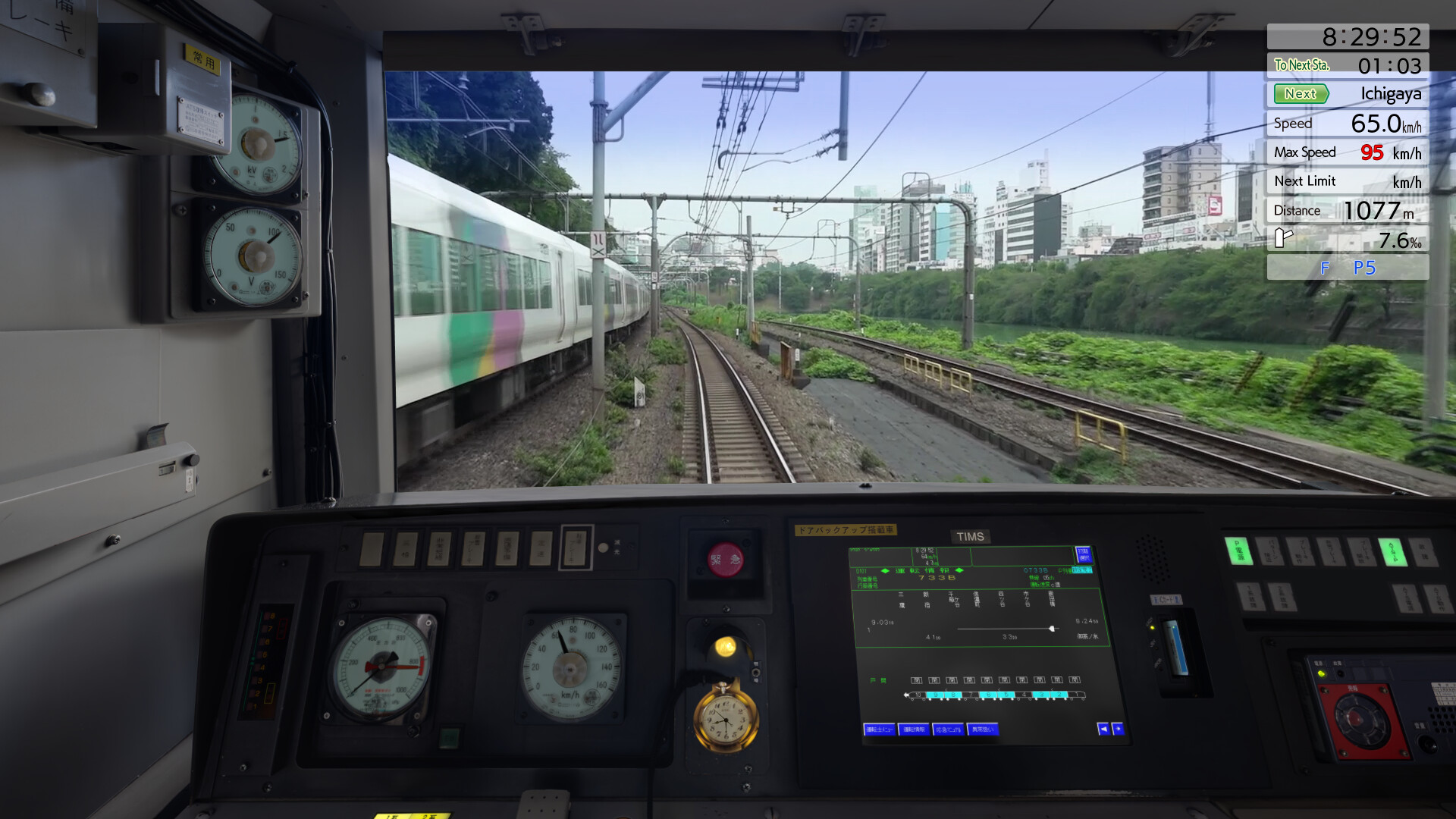
Immediately after departing Akihabara Station, the buildings of the Akihabara district come into view.
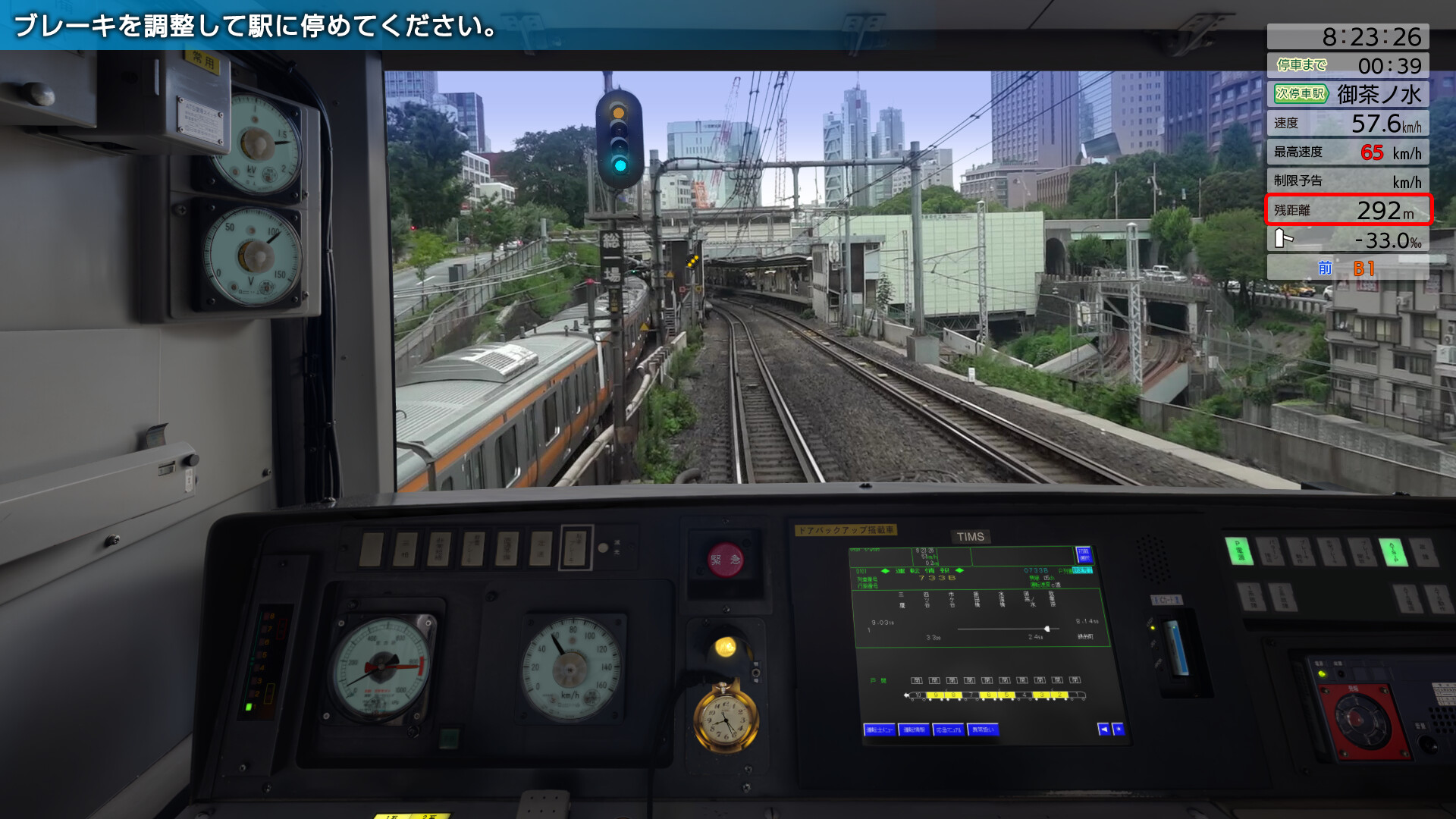
Upon arriving at Ochanomizu Station, the train descends the steepest gradient on the Chuo/Sobu Local Line while offering a panoramic view of the Chuo Rapid Line and Tokyo Metro Marunouchi Line.
□Suidōbashi Station
Used rails imported from Germany are repurposed as pillars. A closer look reveals they are indeed rails.
□Iidabashi Station
The platform is positioned closer to Ochanomizu than the current layout, creating a platform with a sharp curve.
□Yotsuya Station to Shinanomachi Station
After leaving Yotsuya Station, the train runs through the “Kyu-Gosyo Tunnel,” the only tunnel used by local trains on the Chūō・Sōbu Line(Local). Just before entering the tunnel, it crosses the Tokyo Metro Marunouchi Line.
□Yoyogi Station to Shinjuku Station
While overlooking Shinjuku's skyscrapers, the train arrives at Platform 16, the westernmost platform at Shinjuku Station.The platform visible to the left at Shinjuku Station belongs to the Odakyu Electric Railway Odawara Line.
□Shinjuku Station to Higashi-Nakano Station
After separating from the Yamanote Line, the track curves sharply left towards Higashi-Nakano Station and then heads west.
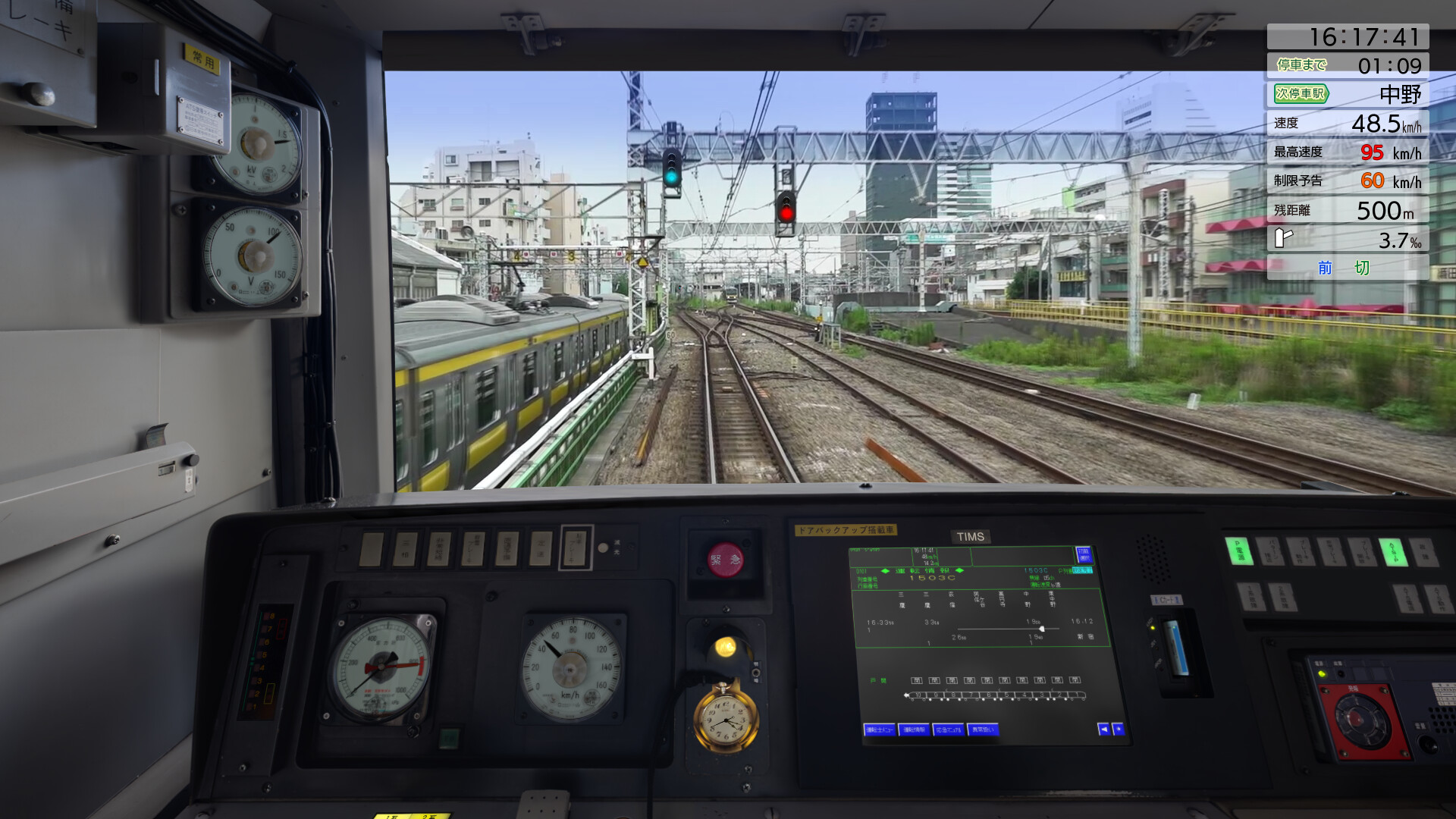
□Higashi-Nakano Station to Nakano Station
Just before Nakano Station, the Tokyo Metro Tozai Line merges from underground and operates through service to Mitaka Station.
At Nakano Station, the Chuo・Sobu Line(Local) platforms are positioned on either side of the Tokyo Metro Tozai Line platforms.
□Mitaka Station
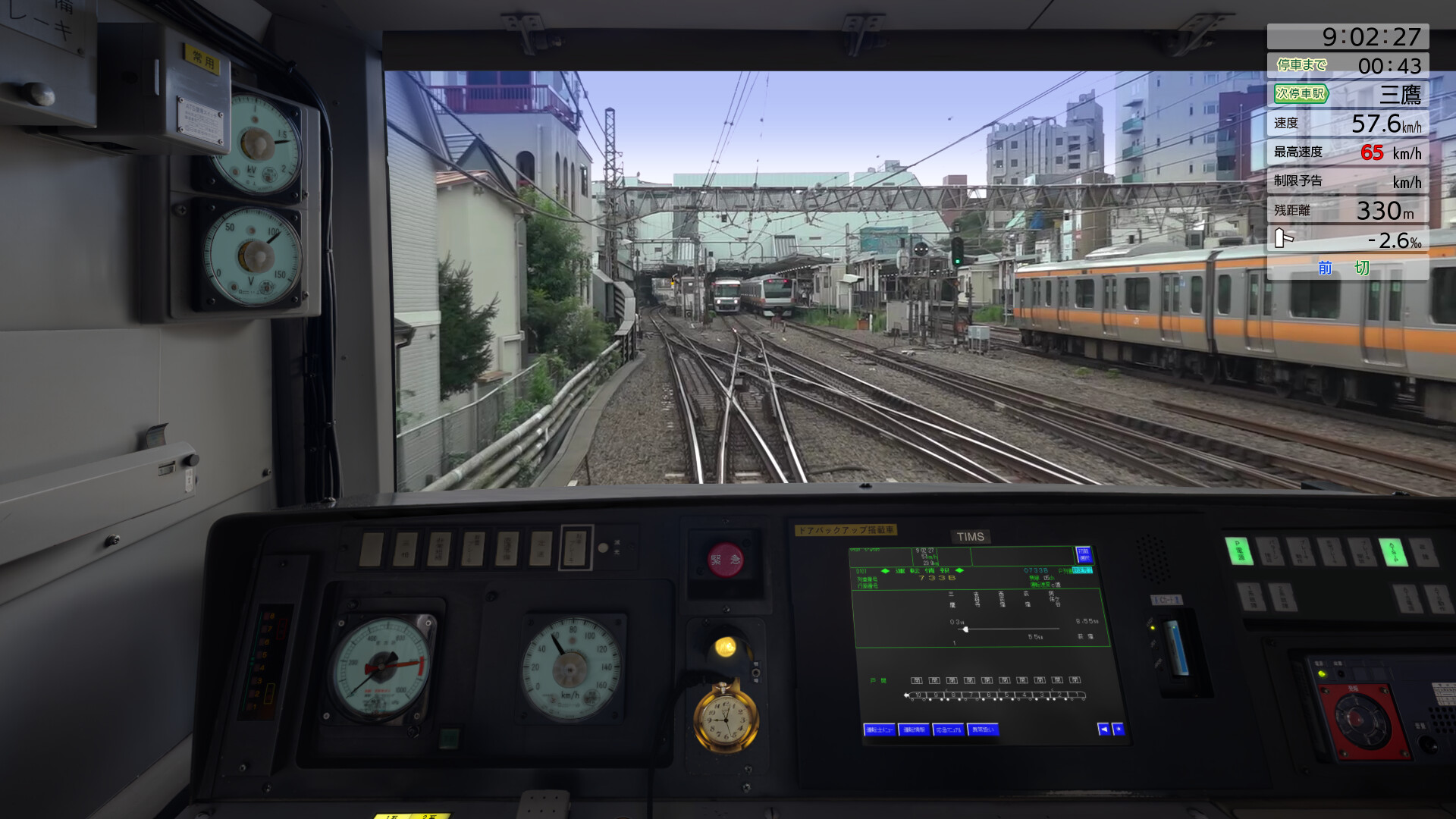
This is the terminus for local trains on the Chūō・Sōbu Line(Local). Beyond the tracks lies the Mitaka Rolling Stock Center, the depot for local trains on the Chūō・Sōbu Line(Local).
Route Information
Section: Chūō・Sōbu Line(Local) Westbound Chiba ⇒ Mitaka
Total length: 60.2km
Number of Stations: 39
Security equipment: ATS-P
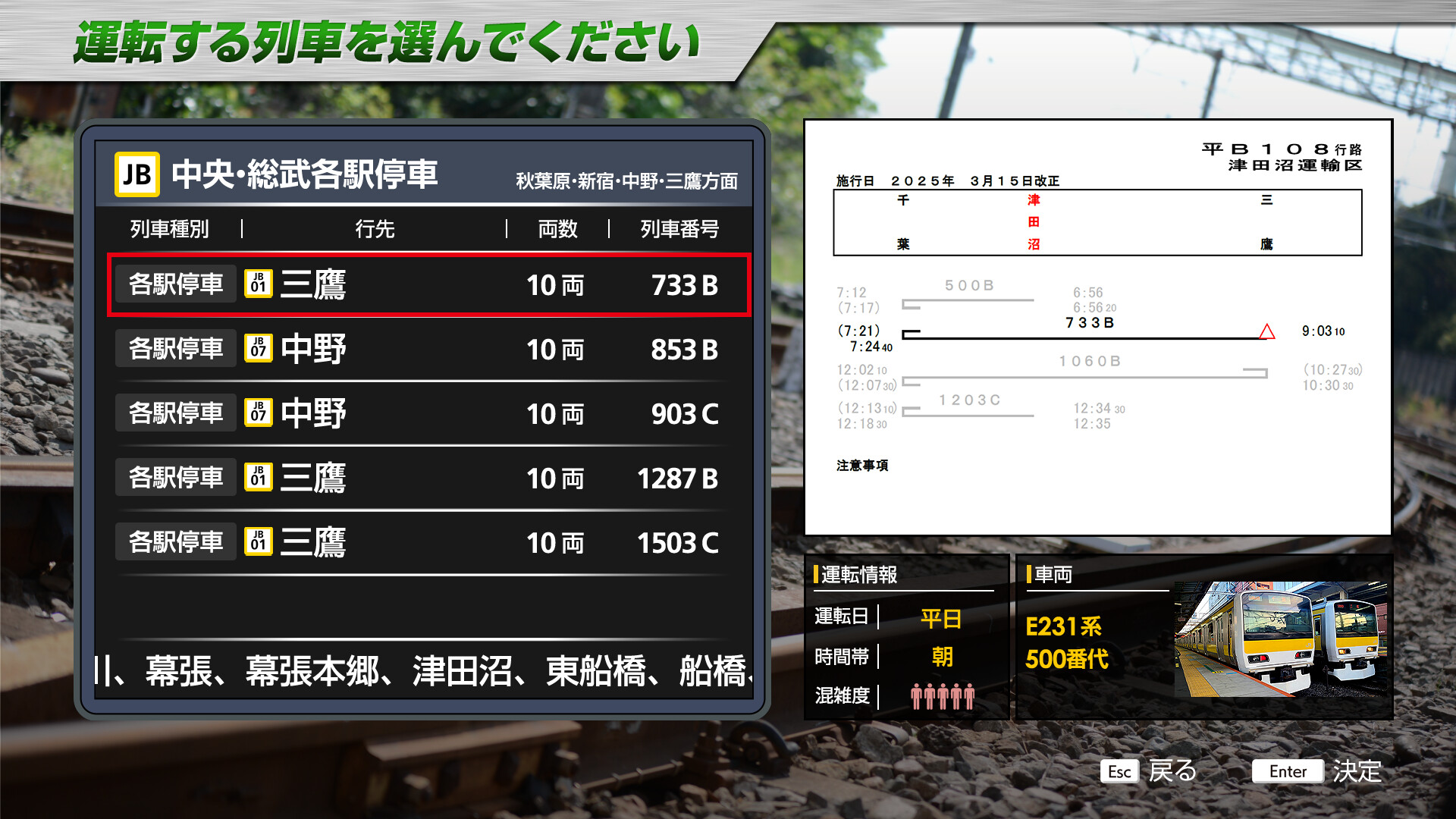
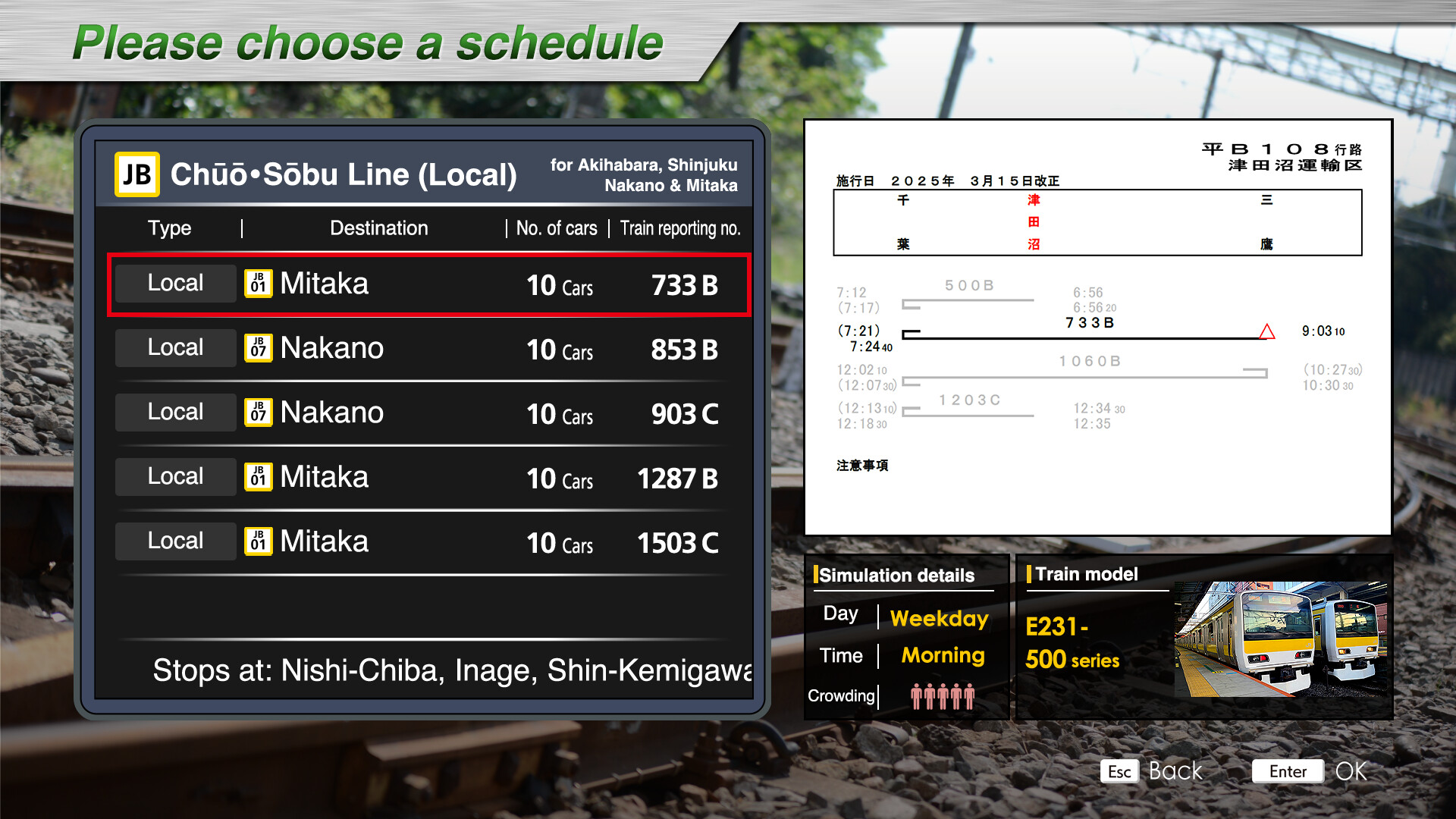
Train schedules that can be operated
Train Number:733B
Type/Destination:Local train to Mitaka(weekday)
Section where you can drive:Chiba(07:24)→MItaka(09:03)
Type of train: Series E231-500 10 cars
Responsible for real voice train announcements: Tsudanuma unification center
Train Number:853B
Type/Destination:Local train to Nakano(weekday)
Section where you can drive:Nishi-Funabashi(08:17)→Nakano(09:15)
Type of train: Series E231-500 10 cars
Responsible for real voice train announcements: Tsudanuma unification center
Train Number:903C
Type/Destination:Local train to Nakano(weekday)
Section where you can drive:Chiba(09:32)→Nakano(10:53)
Type of train: Series E231-500 10 cars
Responsible for real voice train announcements: Tsudanuma unification center
Train Number:1287B
Type/Destination:Local train to Mitaka(weekday)
Section where you can drive:Tsudanuma(12:40)→MItaka(13:57)
Type of train: Series E231-500 10 cars
Responsible for real voice train announcements: Tsudanuma unification center
Train Number:1503C
Type/Destination:Local train to Mitaka(weekday)
Section where you can drive:Chiba(15:01)→MItaka(16:33)
Type of train: Series E231-500 10 cars
Responsible for real voice train announcements: Tsudanuma unification center